
Infrastructure Funding Initiative
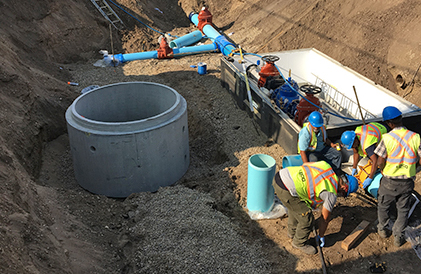
About this project
The Infrastructure Funding Initiative (formerly the Off-Site Levy Update) is a collaborative decision-making process with City administration and the Off-Site Levy Advisory Committee (OSL-AC). In early 2025, an Off-site Levy Advisory Committee was established (see Terms of Reference). This committee represents key stakeholders who would be responsible for paying off-site levies (engaging these affected groups in Bylaw development is a stipulation of the Municipal Government Act).
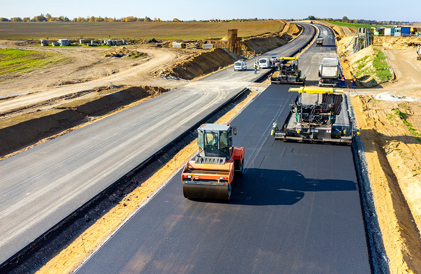
PROJECT PURPOSE:
To develop a decision-making framework (infrastructure delivery philosophy) for growth-related infrastructure that will guide financing and funding of growth related infrastructure in the future.
SCOPE OF PROJECT:
The scope of this project is to discuss how water, sewer, storm, and road infrastructure should be funded. A municipality may also use off-site levies for the construction of community recreation facilities, fire halls, police stations, and libraries, however; the City of Medicine Hat currently funds these facilities through general taxation.
- The initiative consists of four phases with the goal of modernizing how Medicine Hat plans for and funds off-site water, sewer, storm, and road infrastructure tied to growth.
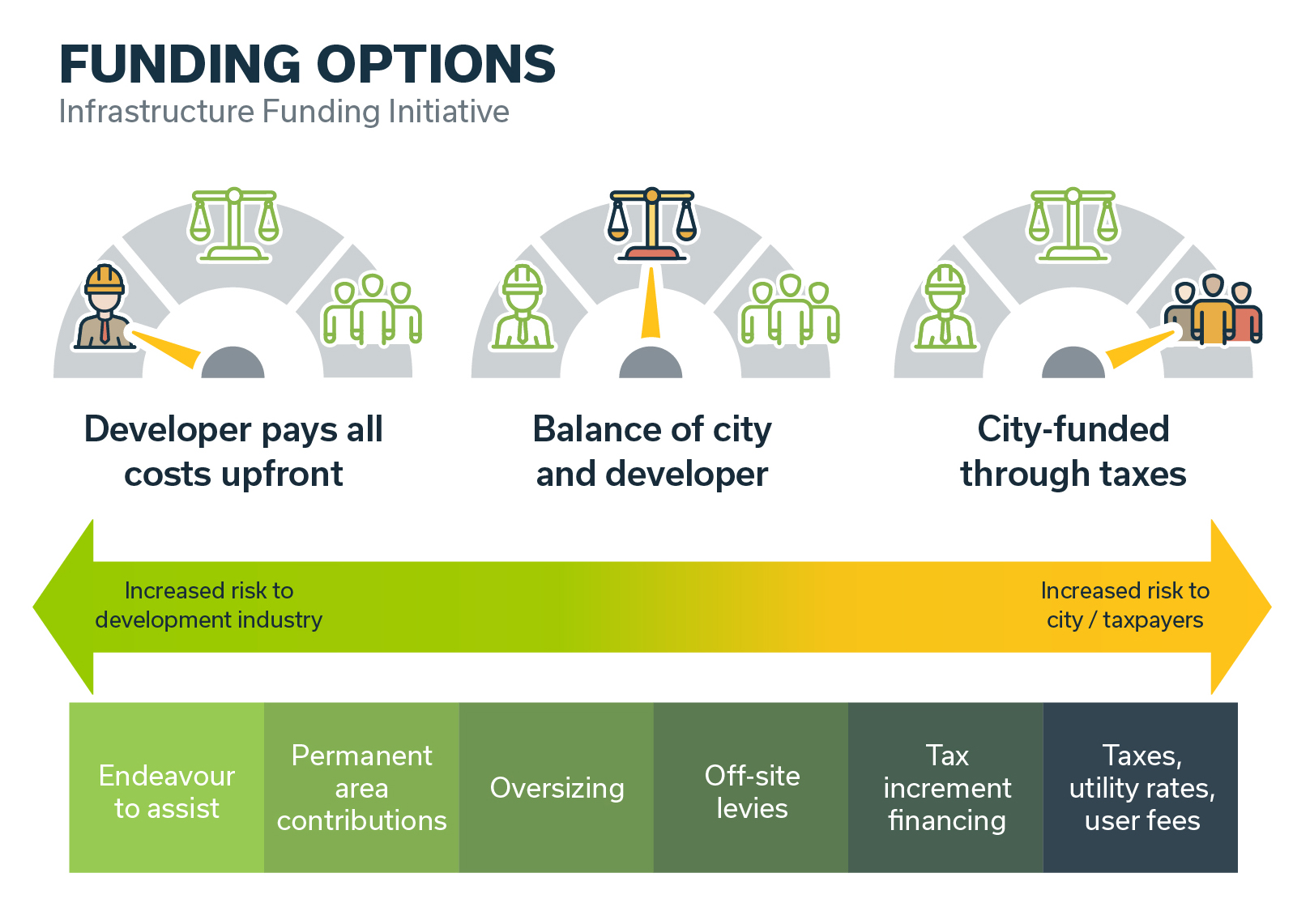
- This project was repositioned as an Infrastructure Funding Initiative to better reflect the broader objectives and to acknowledge that multiple funding tools may be considered to deliver essential infrastructure required for growth. The project will produce an Infrastructure Delivery Philosophy that will recommend a funding approach, which may include a revised Off-site Levy Bylaw or alternative tools.
- Until this project is complete, the current rates are to remain in effect until Council approves a new approach to off-site infrastructure funding.
Why we're doing this
In mid-2024 an Off-site Levy Bylaw update (mostly inflationary) was completed by Planning and Development Services for City Council consideration. Council opted to hold a non-statutory Public Hearing on September 3, 2024, to hear from the Public and affected stakeholders.
Stakeholders' feedback indicated that their questions had not been fully answered regarding the preparation methodology, project costs, and benefiting areas. They requested a deeper review before a new bylaw was proposed.
As part of the submissions to the non-statutory Public Hearing, the Chamber of Commerce submitted a letter requesting an Advisory Committee (or a similar group) be established to address outstanding questions and revisit the methodology used to prepare the draft Off-site Levy Bylaw.
In September 2024, a commitment was made to Stakeholders that a recommendation for funding off-site infrastructure would not be presented to Council for consideration until all questions were answered, regardless of the effort necessary to determine those answers.
Project goals
PRIMARY GOAL:
To demonstrate that stakeholder questions have been answered, that feedback has been documented and acknowledged, and that a general consensus has been achieved on the Infrastructure Delivery Philosophy and Draft Bylaw.
SUPPORTING GOALS:
Optimize existing servicing capacity. This will reduce near-term capital spending and support long-term financial sustainability.
Align funding with actual growth trends and predictions. This will ensure infrastructure investment matches realistic demand.
Provide clarity and predictability. This will provide the development community with certainty about where growth is anticipated and the how costs are allocated.
Project phases
There are four phases to this project.
Phase 1 - INFRASTRUCTURE DELIVERY PHILOSOPHY
Develop an infrastructure delivery philosophy for growth-related infrastructure that will guide financing and funding of infrastructure in the future.
Phase 2 - DEVELOP INFRASTRUCTURE FUNDING APPROACH
Identify the infrastructure to be included in the infrastructure funding program, define the associated approach and methodology, and engage/educate on the program and its alignment with the infrastructure delivery philosophy.
Phase 3 - DRAFT INFRASTRUCTURE FUNDING BYLAW
Ensure alignment and consider gathered feedback to create an infrastructure funding program that is clear, transparent and logic-based, and will inform the final infrastructure funding bylaw.
Phase 4 - INFRASTRUCTURE FUNDING BYLAW IMPLEMENTATION
Implementation of the Bylaw
Who's involved?
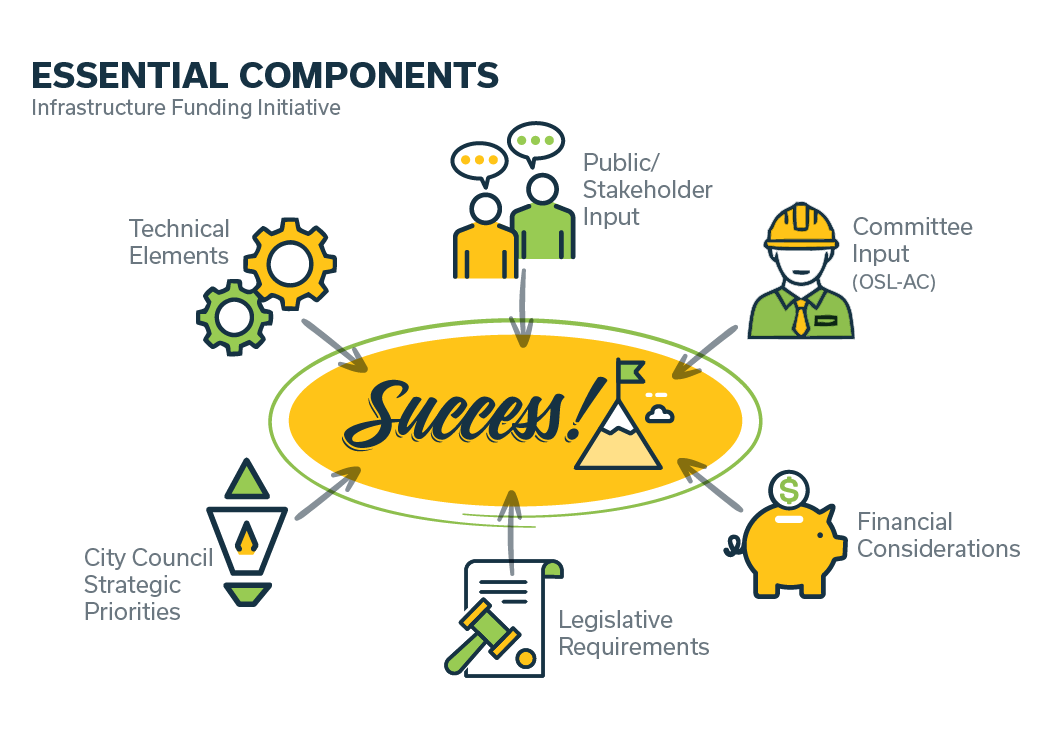
> See more details about who's involved
What we've heard so far
Key themes from meetings and workshops to date:
Transparency and Methodology – A clearer and more consistent explanation of how off-site levy projects are selected, costed, and allocated.
Financial Clarity – Clear, complete, and verifiable information on levy collections, expenditures, and financial impacts.
Predictability of Rates – Stable and predictable levy rates based on realistic growth assumptions.
Consultation and Involvement – Earlier, more meaningful engagement and greater confidence that feedback informs decisions.
Advisory Committee influence in this project
The Off-site Levy Advisory Committee (OSL-AC) was formed in response to stakeholder requests and are key to reviewing the methodology, project lists, staging, benefitting areas and shaping the overall recommendations before anything is presented to Council.
City Administration committed to not presenting a recommendation to Council until all stakeholder questions are answered and industry support is secured.
Off-site Levies (OSLs) are one potential mechanism for funding growth-related infrastructure. If OSLs are selected as part of the City's funding strategy, the Municipal Government Act (MGA) requires the City to provide the following:
- any information or data the municipality relied upon;
- the calculations that were performed to determine the amount of the levy;
- any assumptions the municipality made in calculating the levy, including, without limitation, any information, data or assumptions the municipality used in models to complete calculations.
How to get involved
 |  |  | ||
1) Review the What We Heard report. This report captures feedback from committee members dating back to the Southeast Alberta Chamber of Commerce's first letter to City Council in 2022. | 2) Complete the IFI validation check-in survey. Committee feedback on IFI key assumptions is critical, and we encourage all committee members to complete this validation check-in. | 3) Post a question. All submitted questions will be compiled and the project team will prepare responses for discussion at our next in-person meeting |
-
Who's involved?
Share Who's involved? on Facebook Share Who's involved? on X (formerly Twitter) Share Who's involved? on Linkedin Email Who's involved? link
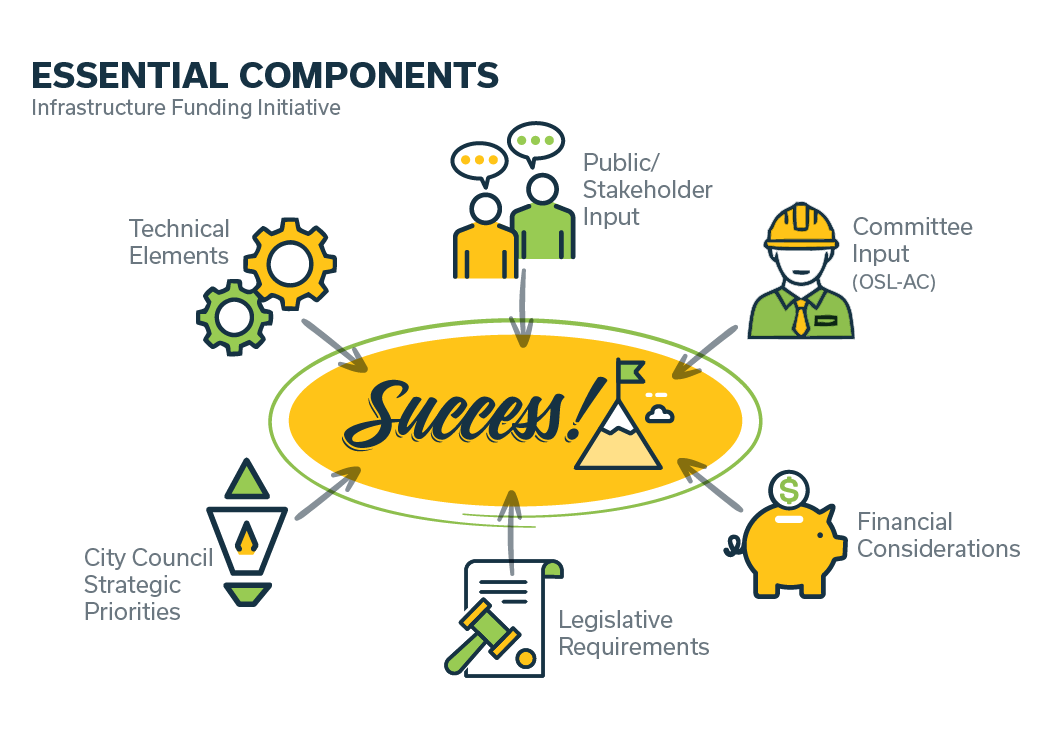
INVOLVED PARTIES:
1) City Council - provides strategic direction, public accountability, reviews the framework and funding options, weighs fiscal implications, and decides whether to adopt any bylaw or funding approach once stakeholder questions are addressed and recommendations supported (Final Approval).
2) Off-Site Levy Advisory Committee (OSL-AC) - a mix of individuals from the development community, engaged through workshops and meetings:
- BILD
- Benchmark Geomatics
- Box Springs Business Park
- Chamber of Commerce
- Coulee Ridge
- Jayco Homes
- Landmark Properties
- Meadowlands Development
- Medicine Hat Economic Development
- Planning and Development Services
- WSP
3) Industry Stakeholders - industry, developers and the advisory committee shape methodology, stagingContinue reading
-
Goals and values
Share Goals and values on Facebook Share Goals and values on X (formerly Twitter) Share Goals and values on Linkedin Email Goals and values link
PRIMARY PROJECT GOAL:
Demonstrate that stakeholder questions have been answered, that feedback has been documented and acknowledged, and that a general consensus has been achieved on the Infrastructure Delivery Philosophy and Draft Bylaw.
SUPPORTING GOALS:
Optimize existing servicing capacity. This will reduce near-term capital spending and support long-term financial sustainability.
Align funding with actual growth trends and predictions. This will ensure infrastructure investment matches realistic demand.
Provide clarity and predictability. This will provide the development community with certainty about where growth is anticipated and the how costs are allocated.
ENGAGEMEMENT GOALS:
Trust and relationship building between the City and developmentContinue reading
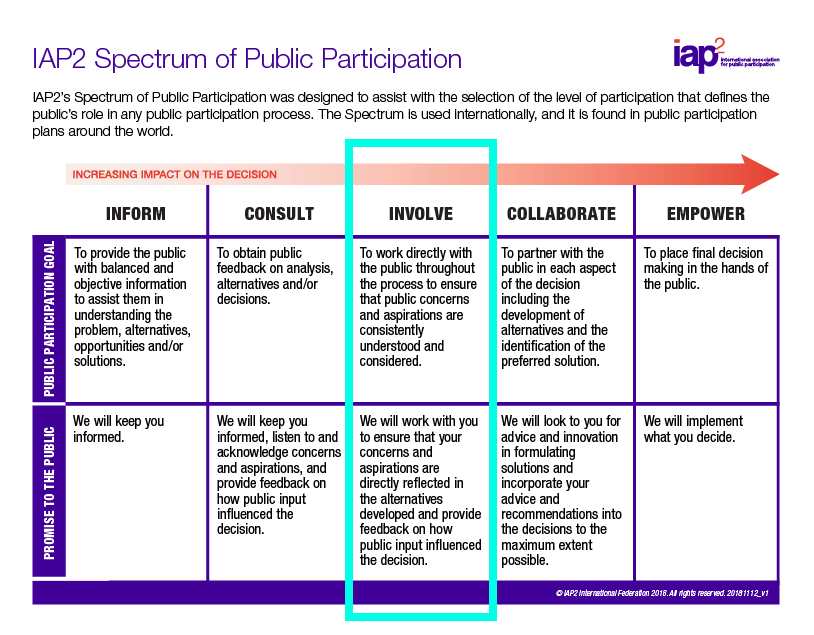
Project Engagement Goals
- To establish trust and relationship building between the City and the development community.
- To ensure that committee perspective is heard.
- To achieve consensus on infrastructure delivery philosophy.
- To ensure all options are explored.

-
 Off-Site Levy Advisory Committee - Terms of Reference
-
Off-Site Levy Advisory Committee Meetings
-
 PPT - OSL Advisory Meeting - Jan. 30 2025.pptx (8.31 MB) (pptx)
-
Final Minutes -Off-Site Levy Advisory Committee Meeting - Jan 30 2025.pdf (144 KB) (pdf)
-
Agenda - Off-Site Levy Advisory Committee Meeting - Mar. 18 2025.pdf (114 KB) (pdf)
-
OSL Committee Meeting PPT Presentation - Mar 18 2025.pdf (3.77 MB) (pdf)
-
Adopted Minutes -Off-Site Levy Advisory Committee Meeting - Mar 18 2025.pdf (126 KB) (pdf)
-
Agenda - Off-Site Levy Advisory Committee Meeting - May 29 2025.pdf (478 KB) (pdf)
-
Urban Systems PPT Presentation to OSLAC - May 29 2025.pdf (459 KB) (pdf)
-
Adopted Minutes -Off-Site Levy Advisory Committee Meeting - May 29 2025.pdf (116 KB) (pdf)
-
-
Off-Site Levy Advisory Committee Workshops
-
Internal Workshop - August 25, 2025
-
Response to Chamber Questions - September 2025
-
Development Advisory Panel Meetings
